
Hair Removal · The Aesthetic Journal
Laser Hair Removal in Oakton: Skin Type, Session Count, and What It Costs
Last updated: August 25, 2026
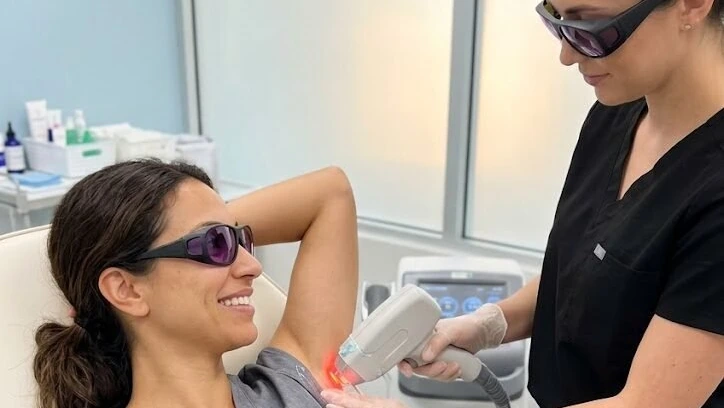
Laser hair removal is cleared by the FDA for permanent hair reduction, not permanent removal, and the difference is written into the clearance document itself.[1] In Virginia it is also a prescription device, and state law says who may operate one.[1][2]
A laser targets the pigment in your hair and damages the follicle with heat. It thins hair substantially and permanently reduces how much grows back. It does not clear every hair forever, it does not work on hair without pigment, and it takes a course of treatments rather than a visit. Anyone promising you permanent removal from a laser is describing something the device is not cleared to do.
Thirty years of doing this in Northern Virginia has taught me that almost every unhappy laser client was unhappy about an expectation, not a result. So let me set the expectation properly.
- The FDA defines permanent hair reduction as “the long-term, stable reduction in the number of hairs regrowing when measured at 6, 9, and 12 months after the completion of a treatment regime.”
- Professional laser hair removal devices are cleared as prescription devices, not over-the-counter.
- Virginia law requires laser hair removal to be performed by a physician, PA or advanced practice registered nurse, or by a properly trained person under their direction and supervision.
- Laser targets pigment. On light, gray, red or very fine hair there is little pigment to target, and electrolysis is the honest answer.
- The American Society of Plastic Surgeons puts laser skin treatments at an average of $697, and says plainly that figure is only part of the total.
What the FDA Clearance Actually Says
Most pages selling this treatment use “permanent hair removal” and “permanent hair reduction” interchangeably. The FDA does not. The clearance defines permanent hair reduction as a long-term, stable reduction in the number of hairs regrowing, measured at 6, 9 and 12 months after a completed course.[1]
I pulled the clearance document for a diode laser hair removal system and read the Indications for Use form. The wording is unambiguous:
“The Diode Laser Hair Removal device is intended for hair removal, permanent hair reduction on all skin types (Fitzpatrick skin type I-VI), including tanned skin. Permanent hair reduction is defined as the long-term, stable reduction in the number of hairs regrowing when measured at 6, 9, and 12 months after the completion of a treatment regime.”[1]
Two things are worth pulling out of that sentence.
Reduction, not removal. The legal claim is that fewer hairs grow back and that the change holds. It is not that hair stops existing. If you want the language that means every hair, gone, that is electrolysis, and it is a different technology entirely.
The measurement window is 6, 9 and 12 months after you finish. That tells you something no marketing page will: this is judged over a year, after a completed course. Anyone assessing your result at week three is assessing swelling and shedding, not outcome.
Virginia Law on Who May Operate the Laser
Laser hair removal devices are cleared as prescription devices.[1] Virginia law requires the procedure to be performed by a licensed physician, physician assistant or advanced practice registered nurse, or by a properly trained person under their direction and supervision.[2] Board regulations add complication training and a minimum of ten proctored cases.[3]
This is the section I have never seen on a competitor’s page, and it is the most useful thing a Northern Virginia buyer can know.
The Type of Use box on the FDA form is ticked for prescription use, not over-the-counter.[1] Virginia Code then sets who may operate one. The statute reads:
“The practice of laser hair removal shall be performed by a properly trained person licensed to practice medicine or osteopathic medicine or a physician assistant … or an advanced practice registered nurse … or by a properly trained person under the direction and supervision of a licensed doctor of medicine or osteopathic medicine or a physician assistant … or an advanced practice registered nurse …”[2]
The board regulations add detail. Training must cover recognition of and response to complications, plus a minimum of ten proctored patient cases demonstrating competency across skin types. Where a physician assistant supervises, that PA must be readily available at the time the procedure is performed.[3]
Notably, the statute does not define “properly trained person.” That gap is why the question matters.
What to do with this. Before you book laser hair removal anywhere in Virginia, ask two questions: who is the supervising physician, PA or nurse practitioner, and what training has the person actually holding the handpiece completed. A practice that answers both easily is a practice that has thought about it. You are entitled to ask, and the answer tells you a great deal.
Want a straight answer about whether laser is even the right technology for your hair?
Why Skin Type and Hair Color Decide Your Result
Laser hair removal works by selective photothermolysis: the laser light is absorbed by the pigment in your hair and converted to heat that damages the follicle. Hair color is therefore the bigger predictor of results, and skin type changes the settings and safety margin rather than your eligibility.
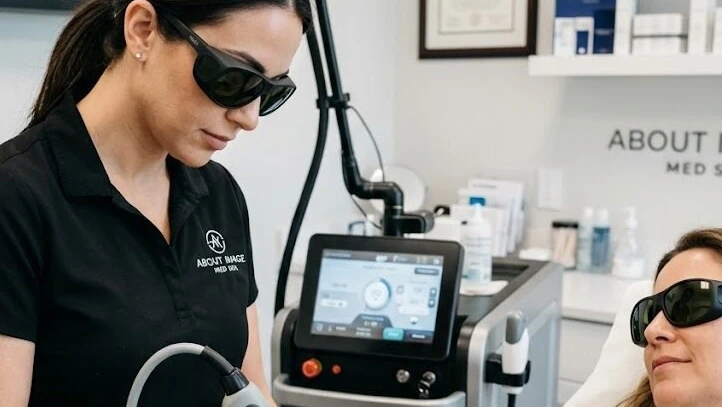
Hair color is the bigger variable, and it is the one people get wrong. Dark, coarse hair absorbs laser energy well and responds well. Light blonde, white, gray and true red hair contain little of the pigment the laser targets, so there is nothing for the energy to grab. No amount of sessions changes that physics. If your hair is in that group, laser is the wrong purchase and I will tell you so before you spend anything.
Skin type changes the settings and the safety margin, not the eligibility. Modern diode systems are cleared for Fitzpatrick skin types I through VI, including tanned skin.[1] Darker skin has more pigment in the surrounding tissue, which means energy must be delivered more conservatively to protect the skin while still reaching the follicle. That usually means a more cautious plan, sometimes more sessions, and it absolutely means the operator’s training matters more.
Hormones matter more than most people expect. Hair growth on the face, chin and neck is often hormonally driven, and hormones keep signalling after treatment. That is why facial hair frequently needs maintenance sessions when legs or underarms do not.
How Many Sessions You Will Actually Need
No regulator publishes a required session count and the FDA clearance does not specify one. What it specifies is when the result is measured: 6, 9 and 12 months after the course is complete.[1] A laser only affects follicles in the active growth phase, which is why treatment is a course spaced over weeks rather than a single visit.
Here is where I decline to give you the number you want, and the reason is honest.
The number of sessions in a course depends on your hair color and coarseness, the area being treated, your skin type, and whether the growth is hormonally driven. What I can tell you plainly is how it behaves. Hair grows in cycles, and a laser only affects follicles that are in the active growth phase on the day you are treated. That is the entire reason this is a course rather than a visit: you are waiting for the rest of your follicles to cycle into the phase where they can be affected. Sessions are spaced weeks apart for that reason, not to stretch out the billing.
Larger areas do not need more sessions than small ones. They cost more per session because they take longer, but the cycle biology is the same.
What a practice quoting you a fixed session count over the phone is doing is quoting a package, not a plan. That may still be fine. Just know which one you are buying.
What Laser Hair Removal Costs Near Oakton
The American Society of Plastic Surgeons puts the average cost of laser skin treatments, including laser hair removal, at $697, and states that the figure is only part of the total price.[4] Treat it as a national anchor rather than a quote for your area.
The American Society of Plastic Surgeons is careful about what that number covers:
“This average cost is only part of the total price – it does not include other related expenses.”[4]
| Factor | Effect on cost |
|---|---|
| Area size | Underarms and upper lip are quick. Full legs or a back take far longer per session |
| Number of sessions | This is a course. Budget for the course, not the visit |
| Hair color and coarseness | Poorly responding hair may need more sessions or a different technology entirely |
| Maintenance | Hormonally driven facial hair often needs occasional top-ups after the initial course |
Ask any provider for the price of a full course for your specific area, and ask what a maintenance session costs afterward. Comparing single-session prices between practices is the most common way people overpay.
When Electrolysis Is the Better Answer
Laser is cleared for permanent hair reduction; electrolysis is the method that may be described as permanent hair removal. Laser is faster and better value on large areas of dark, coarse hair. Electrolysis works on light, gray and red hair that a laser cannot target at all.
We perform both, which is the only reason I can give you a straight comparison. Most practices offer one and their advice reflects that.
| Laser | Electrolysis | |
|---|---|---|
| FDA claim | Permanent hair reduction | Permanent hair removal |
| How it works | Light absorbed by hair pigment | Current applied to the individual follicle |
| Light, gray, red hair | Poorly, there is no pigment to target | Yes |
| Speed | Fast, treats an area per pass | Slow, one follicle at a time |
| Best for | Large areas of dark, coarse hair | Small areas, or hair laser cannot treat |
If your hair is dark and you are treating legs, underarms or a bikini line, laser hair removal is faster and cheaper and it is the right tool. If your hair is light, gray or red, or you want a small area finished completely, electrolysis is the honest answer even though it takes longer.
Plenty of people end up using both: laser to clear the bulk of dark hair, electrolysis to finish the pale hairs the laser was never going to catch.
Booking Laser Hair Removal in Oakton
About Image Med Spa is in Oakton at Hunter Mill Road and Route 123, minutes from Vienna and a short drive from Tysons, McLean, Fairfax, Reston and Herndon. A consultation covers your hair and skin type honestly, including whether laser is the right technology for you at all. You can also see our full range of hair removal options.
Call: (703) 944-4791
Serving Oakton, Vienna, McLean, Tysons, Fairfax, Reston, and Herndon.
Frequently Asked Questions
Tap a question to chat with us.

The Bottom Line
Laser hair removal is genuinely effective for the right hair on the right person, and it is a prescription device governed by real rules about who may operate it. The claim is permanent reduction, measured over a year. The variable that decides your result is hair color. The question worth asking before you book anywhere is who supervises and who was trained.
If your hair is not a good laser candidate, the useful thing a practice can do is say so on the first visit rather than the fourth.
Bring us your hair and skin type and we will tell you honestly whether laser, electrolysis, or both is the right plan.
This article is for general educational purposes and is not medical advice. Individual results vary. About Image Med Spa is a licensed aesthetic practice. Some conditions and treatments require evaluation by a physician. Consult a licensed provider to determine whether a treatment is appropriate for you.
References
- U.S. Food and Drug Administration. 510(k) Premarket Notification K180353, Diode laser hair removal device. Cleared April 17, 2018. Regulation 21 CFR 878.4810, Class II, product code GEX. Indications for Use, Form FDA 3881; Type of Use marked Prescription Use. accessdata.fda.gov
- Code of Virginia § 54.1-2973.1. Practice of laser hair removal. law.lis.virginia.gov
- Virginia Administrative Code 18VAC85-20-91. Practice and supervision of laser hair removal. law.lis.virginia.gov
- American Society of Plastic Surgeons. Laser Hair Removal Cost. Accessed August 25, 2026. plasticsurgery.org
Keep Reading
More on the treatments this article covers
 Facials and TreatmentsThe Perfect Derma Peel in Oakton: What Is Actually In It, and What a Course Costs
 Facials and TreatmentsMicroneedling vs Morpheus8: Two Different Needles, Two Different Categories
 Facials and TreatmentsLaser Toenail Fungus Treatment in Oakton: What “Temporary Increase of Clear Nail” Really Means
- Facials and TreatmentsCryoSculpting vs Morpheus8 Body in Northern Virginia: Fat or Loose Skin?
 Facials and TreatmentsCollagen Banking: Why Building Collagen Early Protects Your Skin Later
 Facials and TreatmentsPRX Treatment in Oakton: Bio-Revitalization Without Needles or Downtime
- Facials and TreatmentsHead Spa and Scalp Treatments in Fairfax for Thinning Hair and Scalp Health
- Facials and TreatmentsHow to Choose a Med Spa in Northern Virginia: What to Ask Before You Book





Latest From the Journal
- Facials and TreatmentsThe Perfect Derma Peel in Oakton: What Is Actually In It, and What a Course Costs
- Facials and TreatmentsMicroneedling vs Morpheus8: Two Different Needles, Two Different Categories
- Facials and TreatmentsLaser Toenail Fungus Treatment in Oakton: What “Temporary Increase of Clear Nail” Really Means